Stay updated on what is trending in health. Discover tips and resources for a healthier, balanced life.
World Sleep Day: Why Sleep Is Essential for Your Health
Learn why sleep is essential for your health. Discover how sleep supports the brain, heart, immunity, mental health and overall wellbeing this World Sleep Day.
NEWS
Dr. S. Ali
3/14/20264 min read
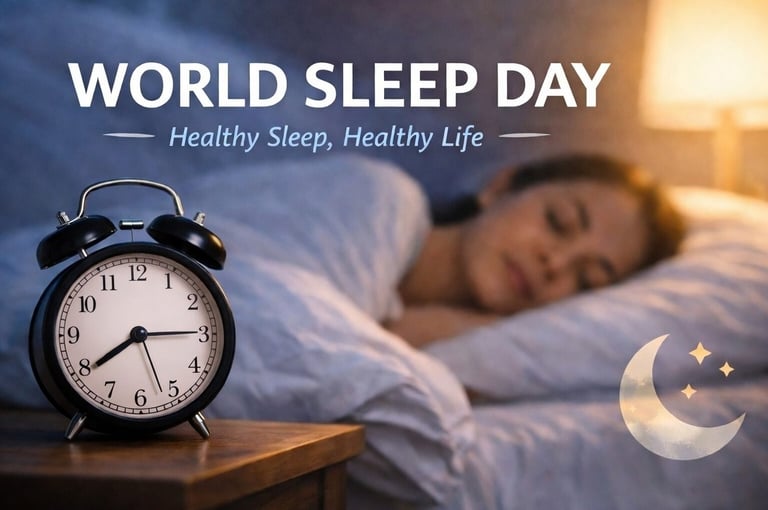
In a world that celebrates productivity, sleep is often treated as optional. Many people stay up late finishing work, scrolling on their phones, or watching “just one more episode,” believing they can make up for lost sleep later.
But the truth is simple: sleep is one of the most important pillars of health, just like nutrition and exercise.
That is exactly why World Sleep Day exists—to remind us that good sleep is not wasted time. It is the time when the body repairs, restores, and prepares for the next day.
World Sleep Day
Every year, health professionals and researchers around the world observe World Sleep Day to raise awareness about the importance of healthy sleep. Organized by the World Sleep Society, this global event highlights the role of sleep in maintaining physical health, mental wellbeing, and overall quality of life. It also encourages people to reflect on their own sleep habits and take steps to improve them.
Why Do We Need Sleep?
Sleep is not merely a period of rest. While you sleep, your body is actively performing critical processes that keep you healthy.
During sleep, the body:
• Repairs cells and tissues
• Restores energy levels
• Strengthens the immune system
• Consolidates memory and learning
• Regulates hormones
• Maintains brain health
Without adequate sleep, many of these processes become disrupted.
In other words, sleep is the body's nightly maintenance system.
What Happens in the Body During Sleep?
Sleep occurs in several stages, including light sleep, deep sleep, and REM (rapid eye movement) sleep. Each stage plays a unique role.
Deep sleep helps the body repair muscles, tissues, and bones. Growth hormone is released during this stage, supporting physical recovery.
REM sleep is essential for the brain. During this stage, the brain processes memories, emotions, and information learned during the day.
Your brain is also busy clearing waste products. Scientists have discovered that during sleep, the brain activates a cleansing system that removes toxins that accumulate while you are awake.
This process may play an important role in protecting the brain from long-term neurological diseases.
Sleep and Your Immune System
Sleep has a powerful effect on immunity.
People who consistently sleep less than six hours per night are more likely to get infections, including the common cold. During sleep, the immune system produces proteins called cytokines that help fight inflammation and infection.
When you do not get enough sleep, the production of these protective molecules decreases.
In simple terms, sleep helps your body defend itself.
Sleep and Mental Health
Sleep and mental health are deeply connected.
Poor sleep can worsen anxiety, irritability, and stress. At the same time, stress and anxiety can make it harder to sleep, creating a difficult cycle.
Adequate sleep helps regulate mood, improve emotional resilience, and support clear thinking.
This is one reason why people often feel overwhelmed or mentally foggy after a poor night of sleep.
Sleep and Heart Health
Your heart also benefits from good sleep.
Research shows that chronic sleep deprivation is associated with increased risks of:
• High blood pressure
• Heart disease
• Stroke
• Obesity
• Type 2 diabetes
Sleep helps regulate blood pressure, metabolism, and the hormones that control hunger.
When sleep is consistently disrupted, these systems can become unbalanced.
How Much Sleep Do We Actually Need?
Most adults need 7–9 hours of sleep per night. However, individual needs can vary slightly. Some people may function well with around 6.5 hours, while others may naturally need closer to 9 hours. This range allows the body and brain to complete several sleep cycles that support physical repair, memory processing, immune function, and emotional balance. Individual needs may vary slightly, but consistently sleeping far less than this is associated with poorer health outcomes.However, sleep quality matters just as much as sleep quantity. Sleeping for eight hours but waking up frequently may still leave you feeling tired.
Signs that you may not be getting enough sleep include:
• Feeling tired during the day
• Difficulty concentrating
• Irritability
• Frequent headaches
• Relying heavily on caffeine to stay alert
If these symptoms occur regularly, your sleep habits may need attention.
Simple Habits That Improve Sleep
Improving sleep does not always require complicated changes. Small habits can make a big difference.
Try the following:
Maintain a consistent sleep schedule
Avoid screens at least one hour before bedtime
Limit caffeine in the evening
Create a quiet, dark sleep environment
Exercise regularly during the day
These habits help regulate the body’s internal clock, making it easier to fall asleep and stay asleep.
A Final Thought on World Sleep Day
Sleep is not lost time. It is an investment in your health, energy, and wellbeing.
On World Sleep Day, it may be worth asking a simple question:
Are you giving your body the rest it needs to function at its best?
Sometimes, one of the most powerful things you can do for your health is also the simplest—getting a good night’s sleep.
Related Articles:
1. Ultra-Processed Foods: Heart Disease and Stroke Risks
Sources:
National Institutes of Health (NIH) — Good Sleep for Good Health
https://newsinhealth.nih.gov/2021/04/good-sleep-good-health
National Heart, Lung, and Blood Institute (NIH) — Why Sleep Is Important
https://www.nhlbi.nih.gov/health/sleep/why-sleep-important
Eunice Kennedy Shriver National Institute of Child Health and Human Development — Sleep Health Information
https://www.nichd.nih.gov/health/topics/factsheets/sleep
Centers for Disease Control and Prevention (CDC) — Sleep and Sleep Health
https://www.cdc.gov/sleep
CDC — About Sleep and Recommended Sleep Duration
https://www.cdc.gov/sleep/about/index.html
American Academy of Sleep Medicine — Sleep Is Essential to Health (Position Statement)
https://pubmed.ncbi.nlm.nih.gov/34170250/
National Institutes of Health — Sleep Research Overview
https://www.nichd.nih.gov/health/topics/sleep
Pulse Your Health
Empowering you to achieve your health goals.
Contact
© 2026. All rights reserved.
Disclaimer: The content on this website is for informational purposes only and is not medical advice. Always seek the advice of your physician or other suitably qualified healthcare professional for diagnosis, treatment and your health related needs.