Stay updated on what is trending in health. Discover tips and resources for a healthier, balanced life.

Typhoid Fever: A Guide to Symptoms, Prevention & Recovery
What is typhoid fever? A serious traveler's illness. Learn how it spreads, its symptoms, and key prevention steps like vaccination & safe food/water practices.
DISEASES AND CONDITIONS
Dr. S. Ali
1/10/20266 min read
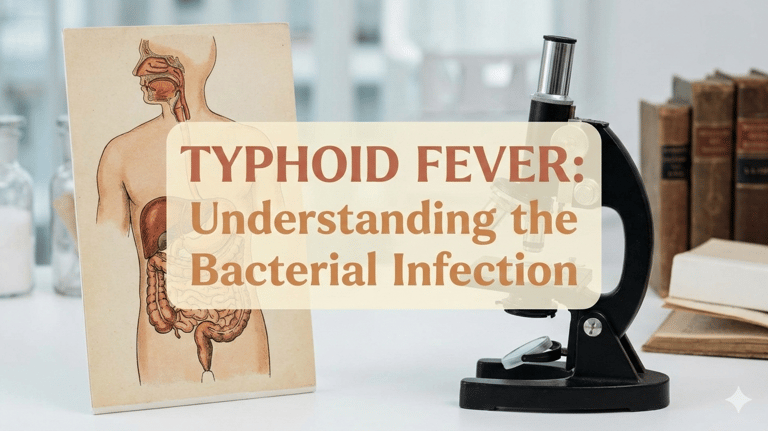
If you’re planning international travel or just want to be in the know about a classic yet serious illness, you’ve likely heard of typhoid fever. It sounds like something from a history book, but it’s very much a modern-day concern in many parts of the world. Let’s break down what it really is, how it sneaks into your system, and—most importantly—how you can avoid it and recover if needed.
What Exactly Is Typhoid Fever?
First things first, let's clear up a common mix-up. Typhoid fever is not the same as typhus. They're caused by completely different bacteria. Typhoid fever is caused by a sneaky bacterium called Salmonella Typhi.
Think of it this way: this germ is a specialist in humans. It lives in the intestines and bloodstream of an infected person and spreads when their poop (stool) contaminates something—usually food or water—that another person then ingests. It’s the ultimate example of the "fecal-oral route," which is as unpleasant as it sounds.
This is why it’s most common in areas with poor sanitation and limited access to clean water. If you are traveling, your risk of exposure to typhoid fever depends heavily on your destination and itinerary within a region. Travelers to areas with limited sanitation infrastructure should take specific precautions.
A Note for UK Readers:
While typhoid fever is rare in the UK and primarily associated with travel to high-risk regions abroad, cases do occur. They typically fall into two categories:
1. Travel-Related Cases: The vast majority of typhoid cases in the UK are diagnosed in people who have returned from visiting friends and family in countries where the disease is endemic (particularly parts of South Asia). This underscores the critical importance of pre-travel vaccination and food/water precautions, even for those familiar with the destination.
2. Local Transmission: Isolated outbreaks can rarely occur if a traveler returns while infected and unknowingly transmits the bacteria through food handling where hygiene standards fail. The UK's robust public health and sanitation systems make widespread transmission highly unlikely, but these events are a reminder that global health is local health.
The key takeaway: For UK residents, the primary risk remains travel to endemic areas. Awareness, vaccination, and post-travel vigilance remain essential. The NHS and the UK Health Security Agency (UKHSA) actively monitor and manage these cases to prevent local spread.
How Do You Know If You Have It? (The Symptoms Timeline)
Typhoid doesn’t hit you like a freight train right away. It’s more of a slow, insidious creep. After exposure, it can take 1 to 2 weeks for symptoms to show up. Here’s what that progression often looks like:
Week 1: It might start off feeling like a bad flu—persistent fever that climbs higher each day, crushing headaches, general fatigue, and a dry cough. A classic sign? An unusually slow heart rate relative to the high fever.
Week 2: If untreated, things get more serious. The fever remains very high. You might develop rose-colored spots on the trunk of your body, experience stomach pain, severe lethargy, and either diarrhea or constipation. This is when the risk of dangerous complications rises.
Week 3 & Beyond: A person can become profoundly ill, facing potential life-threatening complications like intestinal bleeding or perforation.
The bottom line: If you develop a persistent, high fever during or after travel to a high-risk area, see a doctor immediately and mention your travel history. This single detail is crucial for a quick diagnosis.
Your Best Defense: Prevention is Everything
The good news? Typhoid is largely preventable. Your protection plan has three layers:
1. Get Vaccinated
This is your first line of defense for travel. There are two types of vaccines:
An oral vaccine: You take four pills, every other day.
An injectable vaccine: One shot at least two weeks before travel.
Important: No vaccine is 100% effective. They protect about 50-80% of people, so you still need to be careful with food and water. Talk to a travel clinic doctor about which is best for you.
2. Master the "Boil It, Cook It, Peel It, or Forget It" Rule
This is the golden rule for avoiding typhoid and many other travel tummy troubles.
Drink safely: Stick to sealed bottled water or water that has been vigorously boiled for at least one minute. Avoid ice cubes of unknown origin.
Eat smart: Eat foods that are piping hot and thoroughly cooked. Choose fruits and vegetables you can peel yourself (like bananas, oranges). Be wary of raw foods, salads, unpasteurized dairy, and food from street vendors that may have been sitting out.
3. Wash Your Hands.
Good old-fashioned soap and water are your secret weapon. Scrub before eating or preparing food and after using the bathroom. If soap isn’t available, use an alcohol-based hand sanitizer with at least 60% alcohol as a backup.
Diagnosis and Treatment: Getting Back on Your Feet
If a doctor suspects typhoid, they’ll confirm it with a blood, stool, or bone marrow culture. Once confirmed, the treatment is straightforward but non-negotiable: antibiotics.
Completing the full course of prescribed antibiotics is critical, even if you start feeling better quickly.
Some strains of Salmonella Typhi have become antibiotic-resistant, making treatment harder. This is why your doctor will choose the antibiotic carefully, and why prevention is so much better than cure.
Rest and hydration are key parts of recovery.
A note on drug-resistant typhoid
You may have heard about "superbugs"—bacteria that outsmart our medicines. Typhoid fever has its own superbug version, known as drug-resistant typhoid. Imagine having a serious infection, but the usual antibiotics your doctor prescribes simply don't work. That's the growing threat. It turns a treatable disease into a prolonged crisis, highlighting why stopping the infection before it starts (with good hygiene and vaccines) is our smartest defense.
The short answer is: Yes, drug-resistant typhoid is increasingly common and is now a dominant global health threat, particularly in South Asia.
Here is the specific breakdown of how common it is:
The Global Scale of the Problem
1. In South Asia (The Epicenter):
It is extremely common. In Pakistan, an Extensively Drug-Resistant (XDR) strain—resistant to five classes of antibiotics—has caused major outbreaks since 2016 and now accounts for the vast majority of cases.
Similar, highly resistant strains are widespread in India, Bangladesh, and Nepal. In these regions, traditional first-line antibiotics like ampicillin, chloramphenicol, and co-trimoxazole are largely useless.
2. Beyond South Asia:
These resistant strains have been spread globally by travelers, leading to cases in the UK, US, Canada, and Australia. While still less common in these countries than travel-associated sensitive strains, their presence is a major concern for public health officials.
By the Numbers: How Common Is It?
In High-Incidence Countries: In parts of Pakistan, over 80% of typhoid cases are caused by the XDR strain.
A Global Estimate: A 2022 study in The Lancet Microbe estimated that multidrug-resistant (MDR) typhoid causes over 100,000 deaths annually worldwide.
Treatment Reality: For doctors in endemic regions, drug resistance is now the expected scenario, not the exception. They must often start with more expensive, injectable "last-resort" antibiotics like carbapenems or azithromycin.
The Bottom Line: A Shift in Thinking
It is no longer accurate to think of drug-resistant typhoid as a rare or emerging issue. In the regions where typhoid is most prevalent, drug resistance is the norm.
This makes the conversation about typhoid prevention fundamentally different. It's no longer just about avoiding a bad fever; it's about avoiding an infection that could be incredibly difficult and dangerous to treat.
Therefore, for travelers to endemic areas, this reality makes pre-travel vaccination not just a recommendation, but a critical layer of protection against a potentially untreatable infection.
Can You Be a Carrier?
About 3-5% of people who recover from typhoid fever become chronic carriers. This means the bacteria continue to live in their gallbladder or intestines without making them sick, but they can still spread it to others through their stool. Carriers often require longer, more aggressive antibiotic treatment.
The Takeaway
Typhoid fever is a serious but preventable disease. For travelers, it boils down to being proactive: get the vaccine, be hyper-vigilant about what you eat and drink, and practice relentless hand hygiene. Knowledge and preparation are your best tickets to a healthy journey.
Related Articles:
1. WHO warns of "Widespread Resistance" to Common Antibiotics
2. Vaccines: What They Are and Why They Matter to You
Sources:
World Health Organization (WHO):
https://www.who.int/news-room/fact-sheets/detail/typhoid
US Centers for Disease Control and Prevention (CDC):
https://wwwnc.cdc.gov/travel/diseases/typhoid
UK Health Security Agency (UKHSA):
https://www.gov.uk/guidance/typhoid-and-paratyphoid-enteric-fevers-causative-agents-epidemiology-and-clinical-features
Mayo Clinic:
https://www.mayoclinic.org/diseases-conditions/typhoid-fever/symptoms-causes/syc-20378661
Johns Hopkins Medicine:
https://www.hopkinsmedicine.org/health/conditions-and-diseases/typhoid-fever
Cleveland Clinic:
https://my.clevelandclinic.org/health/diseases/17730-typhoid-fever
The Lancet:
https://www.thelancet.com/journals/lanmic/article/PIIS2666-5247(22)00131-7/fulltext
CDC Travelers' Health - Typhoid:
https://wwwnc.cdc.gov/travel/diseases/typhoid
Fit for Travel (NHS Scotland):
https://www.fitfortravel.nhs.uk/advice/disease-prevention-advice/typhoid-and-paratyphoid-fever
Pulse Your Health
Empowering you to achieve your health goals.
Contact
© 2026. All rights reserved.
Disclaimer: The content on this website is for informational purposes only and is not medical advice. Always seek the advice of your physician or other suitably qualified healthcare professional for diagnosis, treatment and your health related needs.