Stay updated on what is trending in health. Discover tips and resources for a healthier, balanced life.

Ringworm Infection: Causes, Symptoms, Spread, and Treatment
Ringworm infection is a fungal skin condition that spreads easily, but can be treated. Learn the symptoms, causes, treatment & prevention to protect your skin.
DISEASES AND CONDITIONS
Dr. S. Ali
2/16/20264 min read
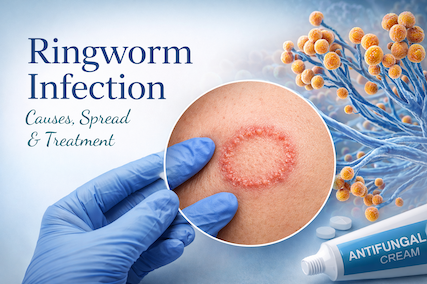
Despite its name, ringworm has nothing to do with worms. It is actually a common fungal skin infection that can affect people of all ages. The good news is that it is usually easy to treat once you recognize it.
Let’s break it down in simple terms.
What Is Ringworm?
Ringworm is a fungal infection of the skin, hair, or nails. It is caused by a group of fungi called dermatophytes that live on the outer layer of the skin.
The infection gets its name because it often appears as a ring-shaped rash with clearer skin in the center. But not all cases look exactly like a ring, which is why it can sometimes be mistaken for eczema, dry skin, or allergies.
Is Ringworm Dangerous?
No, ringworm is not dangerous—but it is contagious and uncomfortable if left untreated. It can spread easily from one part of the body to another or from person to person.
The earlier you treat it, the faster it clears.
What Does Ringworm Look Like?
Common signs include:
A circular or oval rash with raised edges
Red, scaly, or cracked skin
Itching (sometimes intense)
A patch that slowly grows larger
Clearer skin in the center of the rash
Hair loss in affected scalp areas (in scalp infections)
Different body areas can look slightly different, which is why ringworm has several names depending on where it appears.
Where Can Ringworm Occur?
Ringworm can affect almost any part of the body:
Body (Tinea corporis): Classic ring-shaped rash on arms, legs, or trunk
The rash often has a clearer center with a raised, scaly border that slowly expands outward. It may be itchy and can spread through direct skin contact or shared items like towels.Scalp (Tinea capitis): Scaly patches with hair loss, more common in children
Affected areas may look like dandruff but are usually more inflamed, sometimes with black dots where hair has broken off. It can spread easily in schools or households through shared combs, hats, or pillows.Feet (Athlete’s foot): Peeling, cracking skin between toes
It thrives in moist environments such as sweaty shoes or communal showers. Burning, itching, and an unpleasant odor may occur if the infection becomes more extensive.Groin (Jock itch): Red, itchy rash in warm skin folds
The rash often has a well-defined border and may worsen with sweating, friction, or tight clothing. It is more common in people who are physically active or live in hot, humid climates.Nails (Fungal nail infection): Thickened, brittle, discolored nails
Nails may turn yellow, white, or brown and become crumbly or distorted over time. These infections are usually slow to clear and often require prolonged treatment to fully resolve.
How Do You Get Ringworm?
Ringworm spreads through direct contact with the fungus. You can catch it from:
Skin-to-skin contact with an infected person
Sharing towels, clothing, combs, or sports equipment
Walking barefoot in public places like locker rooms or pools
Contact with infected pets (especially cats and dogs)
Touching contaminated surfaces
Fungi thrive in warm, moist environments, which is why sweating, tight clothing, and humidity increase the risk.
Can ring worm infection be sexually transmitted?
Yes — ringworm can be transmitted during sexual contact.
Why Can It Spread During Sex?
Ringworm spreads through direct skin-to-skin contact, and sexual activity naturally involves close, prolonged contact — which makes transmission possible if one partner has an active infection.
So the spread is due to contact, not sexual transmission in the STI sense.
Common Situations Where It Spreads Between Partners
One partner has an untreated rash in the groin, inner thighs, or body (often called jock itch when in the groin).
Skin friction and warmth during intimacy help the fungus spread.
Sharing towels, bedding, or clothing can also transmit the infection.
Moist environments (sweating, humidity) allow the fungus to thrive.
Who Is More Likely to Get Ringworm?
Anyone can get it, but it is more common if you:
Sweat heavily
Play contact sports
Share personal items
Have close contact with animals
Live in hot, humid climates
Have diabetes or reduced immunity
Wear tight or non-breathable clothing
Have frequent skin-to-skin contact with someone who has a fungal infection (including during intimate contact)
How Is Ringworm Treated?
Most cases are treated with antifungal medications.
For Mild Skin Infection:
Over-the-counter antifungal creams, powders, or sprays
Usually applied for 2–4 weeks
Continue treatment even after the rash looks better
For Scalp or Nail Infection:
Oral antifungal medicines may be needed
These require a doctor’s prescription
Treatment may last several weeks to months
Avoid using steroid creams unless prescribed, as they can worsen the infection and mask symptoms.
How Long Does It Take to Clear?
With proper treatment:
Skin infections improve within 1–2 weeks
Full clearing may take up to 4 weeks
Nail and scalp infections take longer
Stopping treatment too early is one of the most common reasons for recurrence.
How to Prevent Ringworm
Simple habits can greatly reduce your risk:
Keep skin clean and dry
Change sweaty clothes promptly
Avoid sharing towels, shoes, or personal items
Wear slippers in public showers or pool areas
Wash hands after touching pets
Check pets for patches of hair loss and seek veterinary care if needed
Choose breathable fabrics like cotton
Dry skin folds carefully after bathing
Can Ringworm Come Back?
Yes, it can recur if:
Treatment is stopped too soon
The source of infection (such as shoes or pets) is not addressed
Skin remains moist and warm
Prevention is just as important as treatment.
When Should You See a Doctor?
Seek medical advice if:
The rash is spreading despite treatment
It affects the scalp, nails, or face
There is pain, swelling, or pus
The infection keeps returning
You are unsure whether it is ringworm
Getting the right diagnosis ensures you receive the correct treatment.
Final Thoughts
Ringworm is very common, very treatable, and very preventable.
It may look alarming, but with early care and good hygiene, it usually clears without complications.
If you notice a persistent itchy rash that is not improving, don’t ignore it. A simple treatment today can prevent weeks of discomfort later.
Sources:
• World Health Organization (WHO) – Ringworm (Tinea) Fact Sheet https://www.who.int/news-room/fact-sheets/detail/ringworm-%28tinea%29
• Centers for Disease Control and Prevention (CDC) – Ringworm Basics https://www.cdc.gov/ringworm/about/index.html
• CDC – Clinical Overview of Ringworm https://www.cdc.gov/ringworm/hcp/clinical-overview/index.html
• American Academy of Dermatology (AAD) – Ringworm Overview https://www.aad.org/public/diseases/a-z/ringworm-overview
• NHS – https://www.nhs.uk/conditions/ringworm
• Cleveland Clinic – https://my.clevelandclinic.org/health/diseases/4560-ringworm
• Johns Hopkins Medicine – https://www.hopkinsmedicine.org/health/conditions-and-diseases/tinea-infections-ringworm
• Encyclopaedia Britannica – https://www.britannica.com/science/ringworm
Pulse Your Health
Empowering you to achieve your health goals.
Contact
© 2026. All rights reserved.
Disclaimer: The content on this website is for informational purposes only and is not medical advice. Always seek the advice of your physician or other suitably qualified healthcare professional for diagnosis, treatment and your health related needs.