Stay updated on what is trending in health. Discover tips and resources for a healthier, balanced life.

Mystery Virus Sweeps the Globe? What the WHO Updates Say
“Mystery virus sweeps the globe” headlines are causing concern—but is it really new? Discover what the WHO says about current global respiratory virus trends.
NEWS
Dr. S. Ali
12/24/20254 min read
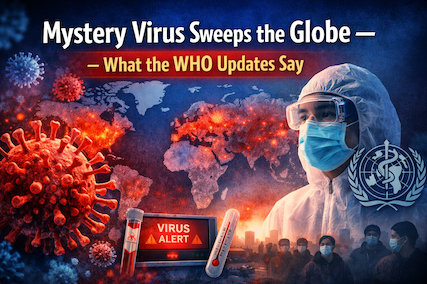
Lately, news headlines and social media posts have been talking about a so-called “mystery virus” spreading in different parts of the world. Some reports have even linked it to discussions involving the World Health Organization (WHO), leaving many people wondering: What is it? Is it something new? And should we be worried?
Despite headlines calling it a “mystery virus,” the situation isn’t as dramatic as it might sound. In reality, the virus at the center of this discussion is not a completely new pathogen but a well-known one that’s showing up more frequently in some places. The virus being mentioned most often is adenovirus — a group of viruses that have been around for decades and usually cause mild illness like common colds or sore throats.
What Does the WHO Say?
According to the World Health Organization (WHO), there is currently no evidence of a new or unknown “mystery virus” sweeping the globe. Instead, what we are seeing is an early and intense respiratory virus season, with several familiar viruses circulating at the same time.
Influenza activity is higher than usual in many parts of the world, particularly influenza A (H3N2), a strain that has undergone some changes since the flu vaccine was selected. Alongside flu, other familiar viruses — including COVID-19, RSV, rhinovirus, parainfluenza, and adenovirus — are also circulating at the same time.
Among these circulating viruses, adenovirus has drawn attention in recent reports — not because it is new, but because of its noticeable spread in certain communities.
When several common viruses spread together, more people get sick at once, symptoms may feel stronger, and recovery can take longer. This combination is what’s fueling concern and dramatic headlines, not a newly discovered illness.
Not a New Virus — Just More Noticeable
Adenoviruses are a large family of viruses that commonly cause respiratory symptoms, fever, runny nose, sore throat, conjunctivitis (pink eye), and sometimes stomach symptoms like diarrhea. Most people with healthy immune systems only experience mild symptoms and recover in a few days.
What’s different this season is that more cases are being reported — and because the virus is very hardy, it can stick to surfaces and survive longer than other respiratory viruses. It also doesn’t have a specific antiviral treatment, so doctors treat symptoms (like fever and congestion) while the body fights the virus on its own.
Is it actually sweeping the globe unusually?
Not according to health authorities. UK Health Security Agency data shows adenovirus cases are stable or even declining in places like England. It's a normal winter virus, often more noticeable in children, and spikes seasonally. No evidence of a new mutation making it dramatically worse globally.
Why Are Experts Talking About It?
Unlike influenza or COVID-19, adenovirus isn’t new, and most people don’t get seriously ill. But health experts are paying close attention for a few reasons:
Contagiousness: Some strains spread easily because they can resist being killed by ordinary disinfectants.
Vulnerable groups: People who are elderly, have weakened immune systems, or are very young may experience more severe symptoms.
Unusual patterns: A rise in cases during times when respiratory viruses usually decline has caught the interest of public health officials.
So while some headlines talk about a “global sweep,” experts are mostly noting more frequent reporting and contagious spread, not a new disease that has suddenly appeared from nowhere.
What Should You Do?
Here’s what health professionals recommend — and none of it involves panic:
1. Practice good hygiene
Wash hands regularly, avoid touching your face, and cover coughs and sneezes. These basics still work against most viruses.
2. Stay informed from reliable sources
Follow updates from health organizations like WHO or your local health department. They track trends and issue guidance based on evidence.
3. Take care of yourself and others
Get enough rest, stay hydrated, and seek medical advice if symptoms are severe or worsen. Vulnerable individuals should be especially cautious.
No Need for Alarm — Just Awareness
Although phrases like “untreatable virus” might sound scary, what’s really being described is that there is no specific antiviral medication for adenovirus right now. Most cases are mild and resolve on their own with rest and supportive care.
The current conversation isn’t about a mysterious new pandemic — it’s about an old virus behaving in a way that public health experts are watching closely. That’s good. It means systems are paying attention and sharing information early so communities and clinicians can respond appropriately.
For the public, this means awareness — not fear — and trusting evidence-based guidance rather than alarming headlines.
“Mystery virus sweeps the globe” headlines are causing concern—but is it really new? Discover what the WHO says about current global respiratory virus trends.
Related Articles:
1. What is Haemophilus influenzae? A Simple Guide to Understanding This Bacteria
2. Vaccines: What They Are and Why They Matter to You
3. Summer COVID-19 Update: Stratus Variant & Rising US Cases
4. New COVID Variant NB.1.8.1: How Dangerous Is It? Symptoms, Transmission and Updates
5. H3N2 Flu Outbreak in Delhi: Symptoms, Treatment & Prevention
6. The Flu Season is Here: What You Need to Know About This Year's Surge
7. H3N2 Influenza: Key Facts on the Fast-Spreading Flu Strain
Sources
WHO — Seasonal Influenza (general info on flu viruses)
https://www.who.int/news-room/fact-sheets/detail/influenza-%28seasonal%29 World Health OrganizationWHO — Recent Global Influenza Situation (flu activity rising and circulating viruses)
https://www.who.int/emergencies/disease-outbreak-news/item/2025-DON586 World Health OrganizationWHO — Respiratory Virus Trends in China (influenza as most common respiratory pathogen)
https://www.who.int/emergencies/disease-outbreak-news/item/2025-DON550 World Health OrganizationCDC — US Weekly Influenza Surveillance Report (flu A H3N2 data and circulating respiratory viruses info)
https://www.cdc.gov/fluview/surveillance/2025-week-50.html CDCCDC — Overview of respiratory viruses including adenovirus
https://www.cdc.gov/respiratory-viruses/data/illnesses-going-around.html CDC
Study on prevalence of respiratory viruses (influenza, RSV, adenovirus, etc.)
https://pmc.ncbi.nlm.nih.gov/articles/PMC10824580/ PMCArticle on the role of multiple respiratory viruses in severe illness
https://www.mdpi.com/2077-0383/14/9/3175 MDPI
Pulse Your Health
Empowering you to achieve your health goals.
Contact
© 2026. All rights reserved.
Disclaimer: The content on this website is for informational purposes only and is not medical advice. Always seek the advice of your physician or other suitably qualified healthcare professional for diagnosis, treatment and your health related needs.