Stay updated on what is trending in health. Discover tips and resources for a healthier, balanced life.

Mumps: Symptoms, Complications, Treatment, and Prevention
Learn about mumps – symptoms, causes, complications, treatment & prevention. Discover how this contagious viral infection spreads and how vaccines protect you.
DISEASES AND CONDITIONS
Dr. S. Ali
3/7/20264 min read
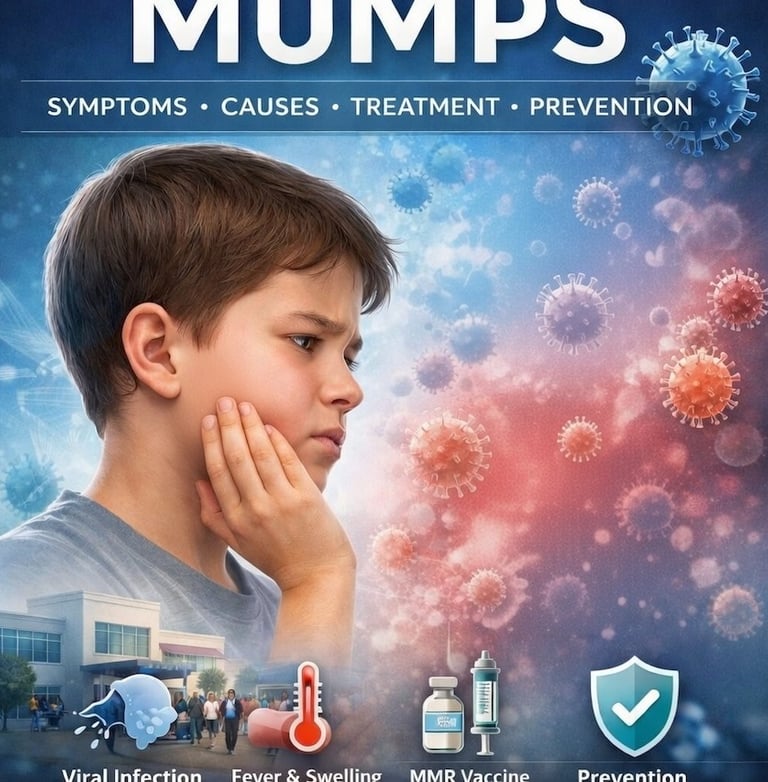
Mumps is a viral infection that many people associate with swollen cheeks and childhood illness. But mumps is more than just “chipmunk cheeks.” It can cause uncomfortable symptoms and, in some cases, serious complications.
Although vaccination has made mumps much less common than it once was, outbreaks can still occur—especially in schools, colleges, and crowded communities. Understanding what mumps is, how it spreads, and how to prevent it can help you protect yourself and your family.
Let’s take a closer look.
What Is Mumps?
Mumps is a contagious viral infection that primarily affects the salivary glands, especially the parotid glands, which are located just below and in front of the ears.
When these glands become inflamed and swollen, the cheeks may puff out, giving the classic appearance many people recognize.
Mumps was once a common childhood disease worldwide. Today, thanks to vaccines, it is much less frequent. However, it has not disappeared entirely.
What Causes Mumps?
Mumps is caused by the mumps virus, which belongs to the paramyxovirus family.
The virus spreads easily from person to person through:
• Respiratory droplets from coughing or sneezing
• Close contact with an infected person
• Sharing utensils, cups, or water bottles
• Touching contaminated surfaces and then touching your mouth or nose
Once the virus enters the body, it multiplies and spreads through the bloodstream, eventually affecting the salivary glands and sometimes other organs.
Symptoms of Mumps
The symptoms of mumps usually appear 16 to 18 days after exposure, although this can range from 12 to 25 days.
Some people may have very mild symptoms, while others develop more noticeable illness.
Common symptoms include:
• Swelling of one or both cheeks
• Painful swelling of the salivary glands
• Fever
• Headache
• Fatigue
• Muscle aches
• Loss of appetite
• Pain while chewing or swallowing
The swelling of the parotid glands usually lasts about 5 to 10 days.
Interestingly, some people infected with the virus may have no symptoms at all, but they can still spread the infection to others.
How Contagious Is Mumps?
Mumps is quite contagious.
A person with mumps can spread the virus from about two days before the swelling begins to five days after it appears.
Because the early symptoms can look like a simple viral illness, people may unknowingly pass the infection to others before realizing they are sick.
This is why outbreaks can occur in places where people live or study closely together, such as:
• Schools
• Universities
• Dormitories
• Military barracks
Possible Complications of Mumps
Most people recover fully from mumps. However, in some cases the virus can affect other parts of the body and lead to complications.
These include:
Orchitis (Inflammation of the Testicles)
This can occur in males who have reached puberty. It causes:
• Testicular swelling
• Pain
• Fever
In rare cases, it may affect fertility.
Oophoritis and Mastitis
In females, the virus may cause inflammation of the ovaries or breast tissue, although this is less common.
Meningitis
Mumps can sometimes cause inflammation of the membranes surrounding the brain and spinal cord.
Symptoms may include:
• Stiff neck
• Severe headache
• Sensitivity to light
• Nausea or vomiting
Fortunately, most cases recover without long-term problems.
Hearing Loss
One rare but serious complication of mumps is permanent hearing loss, usually affecting one ear.
Pancreatitis
Inflammation of the pancreas may occur, leading to:
• Abdominal pain
• Nausea
• Vomiting
How Is Mumps Diagnosed?
Doctors often diagnose mumps based on the characteristic swelling of the salivary glands and the patient’s symptoms.
However, laboratory tests may sometimes be used to confirm the diagnosis. These may include:
• Saliva or throat swabs
• Blood tests
• Urine tests
Testing can be particularly useful during outbreaks or when symptoms are not typical.
Is There a Treatment for Mumps?
There is no specific antiviral treatment for mumps. Because it is caused by a virus, antibiotics do not work.
Treatment focuses on relieving symptoms while the body fights off the infection.
Helpful measures include:
• Getting plenty of rest
• Drinking fluids
• Taking pain relievers such as acetaminophen or ibuprofen
• Applying cold or warm compresses to swollen glands
• Eating soft foods that are easier to chew
• Avoiding acidic foods that stimulate saliva production
Most people recover within two weeks.
When Should You See a Doctor?
You should seek medical advice if you or your child develop:
• Swelling of the cheeks or jaw
• Fever with facial swelling
• Severe headache
• Neck stiffness
• Persistent vomiting
• Testicular pain or swelling
These symptoms may require medical evaluation to rule out complications.
How to Prevent Mumps
The best protection against mumps is vaccination.
The MMR vaccine protects against three diseases:
• Measles
• Mumps
• Rubella
Children usually receive:
• The first dose at 12–15 months of age
• The second dose at 4–6 years
Vaccination significantly reduces the risk of infection and helps prevent outbreaks in the community.
Even if someone who has been vaccinated develops mumps, the illness is usually much milder.
Additional Ways to Reduce the Risk
Simple hygiene practices can also help prevent the spread of mumps:
• Wash hands regularly with soap and water
• Cover your mouth when coughing or sneezing
• Avoid sharing drinks or utensils
• Stay home when sick
• Avoid close contact with infected individuals
These steps are especially important during outbreaks.
Final Thoughts
Mumps may not be as common as it once was, but it has certainly not disappeared. The infection can cause uncomfortable symptoms and, in some cases, serious complications.
The good news is that vaccination and basic hygiene measures can dramatically reduce the risk.
If you notice swelling around the cheeks or jaw—especially along with fever or fatigue—it’s a good idea to seek medical advice.
Awareness and prevention remain our best tools in keeping mumps under control.
Related Articles:
1. Vaccines: What They Are and Why They Matter to You
Sources:
· Centers for Disease Control and Prevention (CDC)
https://www.cdc.gov/mumps
· World Health Organization (WHO)
https://www.who.int/health-topics/mumps
· Mayo Clinic
https://www.mayoclinic.org/diseases-conditions/mumps
· National Health Service (NHS)
https://www.nhs.uk/conditions/mumps
· Johns Hopkins Medicine
https://www.hopkinsmedicine.org/health/conditions-and-diseases/mumps
· Cleveland Clinic
https://my.clevelandclinic.org/health/diseases/15007-mumps
· MedlinePlus – U.S. National Library of Medicine
https://medlineplus.gov/mumps.html
· National Center for Biotechnology Information
https://www.ncbi.nlm.nih.gov/books/NBK534785/
Pulse Your Health
Empowering you to achieve your health goals.
Contact
© 2026. All rights reserved.
Disclaimer: The content on this website is for informational purposes only and is not medical advice. Always seek the advice of your physician or other suitably qualified healthcare professional for diagnosis, treatment and your health related needs.