Stay updated on what is trending in health. Discover tips and resources for a healthier, balanced life.

HPV: What It Is, Why It’s So Common & What You Need to Know
Worried about HPV? Get the facts about this common virus. Learn the different types, how it spreads, the link to cancer & the truth about prevention & vaccines.
DISEASES AND CONDITIONS
Dr. S. Ali
3/1/20265 min read
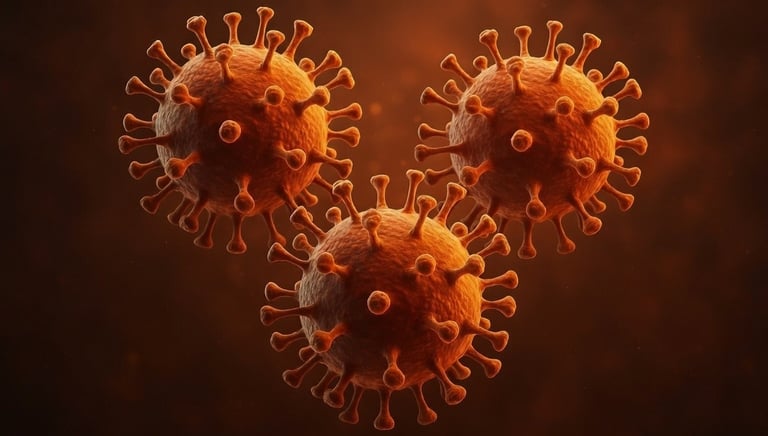
If you’ve heard of HPV but aren’t quite sure what it is, you’re definitely not alone. It’s one of those health topics that gets mentioned a lot—in doctors’ offices, in vaccine conversations, in news articles—but rarely gets explained in plain language.
So let’s fix that.
What Actually Is HPV?
HPV stands for human papillomavirus, and it’s the most common sexually transmitted infection in the United States—and actually, in the world. The numbers might surprise you: over 80% of sexually active people who haven’t been vaccinated will get HPV at some point in their lives. In the U.S. alone, about 13 million people become newly infected each year.
There are over 100 known types of HPV. Some cause common skin warts (like the ones on your hands or feet). Others are sexually transmitted and affect the genital area, anus, and throat. It’s these types we’re going to focus on.
The Two Kinds of HPV You Should Know About
Not all HPV is created equal. When doctors talk about genital HPV, they usually divide it into two categories:
Low-Risk HPV
These types, especially HPV 6 and 11, are the ones that can cause genital warts. They’re called “low risk” because they’re very unlikely to cause cancer. The warts themselves aren’t dangerous—they don’t turn into cancer—but they can be uncomfortable or bothersome.
Genital warts can show up anywhere in the genital area: on the vulva, vagina, cervix, or groin in women, and on the penis, especially under the foreskin in uncircumcised men. They can also appear around or inside the anus, particularly in people who have anal sex.
What do they look like? They usually start as small, soft growths and can develop into rough, irregular bumps that sometimes resemble a tiny cauliflower. They might be skin-colored or whitish on the surface. Here’s the thing, though: some people have no symptoms at all, and others might notice occasional burning, itching, or discomfort.
High-Risk HPV
This is the category that gets all the attention—and for good reason. High-risk types, especially HPV 16 and 18, are responsible for about 70% of cervical cancers. They can also cause cancers of the vulva, vagina, penis, anus, and throat.
Here’s the critical distinction: these high-risk types usually don’t cause visible warts. They can infect cells and cause changes at the microscopic level without you ever knowing anything is happening. That’s why regular screening is so important—it catches these changes before they ever have a chance to become cancer.
How Do You Get HPV?
HPV is spread through intimate skin-to-skin contact, most commonly during vaginal or anal sex. But it can also be spread through other types of sexual contact, including oral sex, which can lead to infections in the mouth and increase the risk of throat cancer.
Here’s the tricky part: someone can have HPV and not know it. The virus can be passed on even when there are no visible warts or symptoms.
What Happens After You Get HPV?
This is where the story gets reassuring.
In most people—like, the vast majority—the immune system clears the virus on its own within 1 to 2 years. The body simply recognizes it, fights it off, and moves on. You might never even know you had it.
The trouble starts when the infection persists. If the virus hangs around for years, particularly the high-risk types, it can gradually cause changes in cells that may eventually lead to precancer or cancer. This process is slow—we’re talking years to decades—which is exactly why screening works so well.
People with weakened immune systems, such as those with HIV, are at higher risk of developing HPV-related cancers because their bodies have a harder time clearing the infection.
How Do You Know If You Have HPV?
For women, there are tests. Routine cervical cancer screening often includes both a Pap test (which looks for abnormal cell changes) and an HPV test (which looks for the virus itself).
For men, there’s currently no routine HPV test. Most HPV infections in men go undetected and clear on their own. If warts appear, they’re visible and can be diagnosed by a doctor. But for the high-risk types that don’t cause symptoms, there’s no standard screening.
If a doctor sees visible warts, they can usually diagnose them just by looking. If warts look unusual, bleed, don’t go away with treatment, or if there are abnormal Pap test results, a biopsy might be done to check for precancer or cancer.
Can HPV Be Treated?
Here’s the short answer: there’s no treatment for the virus itself. Your body has to clear it on its own, which it usually does.
But—and this is important—there are treatments for the problems HPV causes.
For genital warts, options include:
Prescription creams that you apply at home
Procedures done in a doctor’s office: freezing (cryotherapy), burning (electrocautery), laser removal, or surgical removal
For precancerous changes in the cervix, treatments include cryotherapy, laser surgery, or a procedure called LEEP (loop electrosurgical excision procedure) that removes abnormal tissue. For actual cancer, treatment depends on how advanced it is and may include surgery, chemotherapy, or radiation.
The important thing to know is that treating visible warts doesn’t necessarily eliminate the virus from your body—it might still be present in surrounding skin, which is why warts can sometimes come back.
What About All Those Supplements and Probiotics?
You might have seen products online that claim to “clear” HPV or boost your immune system to fight it off. Here’s what the evidence says: there’s currently no proof that any supplement, prebiotic, or probiotic can eliminate HPV.
Some studies have looked at whether things like certain vitamins or probiotics might help, but the research so far is inconclusive and doesn’t support recommending them. Relying on unproven products can waste time, money, and potentially delay the medical follow-up that actually matters.
How to Protect Yourself (and Others)
This is the part where the news gets genuinely good.
The HPV Vaccine
The HPV vaccine protects against the most common cancer-causing types (16 and 18) and the types that cause most genital warts (6 and 11). The current 9-valent vaccine used in the U.S. protects against nine types in total.
Screening
For women, regular screening with Pap tests and HPV testing catches problems early—often years before they could become cancer. The screening recommendations have evolved, so ask your provider what schedule makes sense for you.
Condoms
Condoms can reduce the risk of HPV transmission, but they don’t eliminate it completely because the virus can live on skin not covered by a condom. Still, they’re absolutely worth using—they protect against other Sexually Transmitted Infections and reduce the overall viral load.
The Bottom Line
HPV is incredibly common. Most sexually active people will get it at some point.
Most of the time, it goes away on its own without causing any problems.
When it doesn’t go away, it can cause problems—but those problems are preventable and treatable.
We have tools that work vaccination, screening, and treatment for any issues that arise.
If you have questions about HPV, your risk, or whether vaccination makes sense for you or your kids, talk to your healthcare provider. They’ve had these conversations thousands of times—and they’re there to help, not judge.
Other Articles:
1. Nipah Virus: What You Need to Know About This Deadly Threat
2. Norovirus: The Stomach Bug That Strikes Fast
3. Vaccines: What They Are and Why They Matter to You
Sources:
1. Centers for Disease Control and Prevention (CDC) – HPV Homepage
https://www.cdc.gov/hpv/index.html
2. World Health Organization (WHO) – Immunizing against HPV
https://www.who.int/activities/immunizing-against-hpv
3. Mayo Clinic – HPV infection Diagnosis & Treatment
https://www.mayoclinic.org/diseases-conditions/hpv-infection/diagnosis-treatment/drc-20351602
4. Cleveland Clinic – Expanding Access: Self-Collected HPV Testing (Podcast)
https://my.clevelandclinic.org/podcasts/cancer-advances/expanding-access-self-collected-hpv-testing
5. The BMJ – Extended follow-up of invasive cervical cancer risk after quadrivalent HPV vaccination (Feb 2026)
https://www.bmj.com/content/392/bmj-2025-087326
6. The Lancet Global Health – Effect of Brazil's national HPV vaccination programme on cervical cancer (Oct 2025)
https://www.sciencedirect.com/science/article/pii/S2214109X25002797
7. The New England Journal of Medicine (NEJM) – Noninferiority of One HPV Vaccine Dose to Two Doses (Dec 2025)
https://www.nejm.org/doi/abs/10.1056/NEJMoa2506765
Pulse Your Health
Empowering you to achieve your health goals.
Contact
© 2026. All rights reserved.
Disclaimer: The content on this website is for informational purposes only and is not medical advice. Always seek the advice of your physician or other suitably qualified healthcare professional for diagnosis, treatment and your health related needs.