Stay updated on what is trending in health. Discover tips and resources for a healthier, balanced life.
Hepatitis B Vaccine for Newborns: ACIP’s Vote Sparks Debate
Hepatitis B vaccine for newborns: US policy sparks global debate. Learn why the birth dose was removed and the risks of the new "individual choice" guidance.
NEWS
12/7/20253 min read
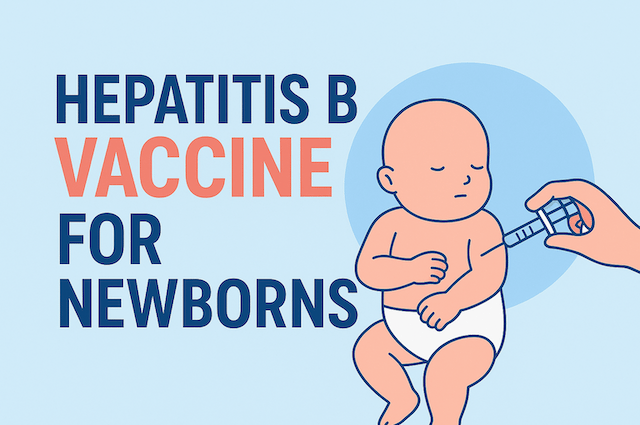
5 December 2025 - For over thirty years, a simple, one-day-old injection has been a cornerstone of newborn care in many countries, especially in the United States: the hepatitis B vaccine given at birth.
This week, that changed. A key advisory panel in the U.S. has voted to scrap the universal "birth dose" recommendation that has been credited with nearly wiping out the virus in American children. The move has ignited a fierce debate between new political appointees questioning vaccine safety and the global medical community warning of dangerous consequences.
What Exactly Changed?
The U.S. Advisory Committee on Immunization Practices (ACIP) voted to end the policy that every healthy newborn should receive the hepatitis B vaccine within 24 hours of birth.
The new guidance says:
Only babies born to mothers who test positive for hepatitis B, or whose mother's status is unknown, should get the shot at birth.
For babies whose mothers test negative, the recommendation is for parents to have a conversation with their doctor about "individual decision-making" on when or if to give the first dose, which could be delayed until the baby is two months old.
In short, a clear, universal "yes" has become a conditional "maybe."
Why Are Doctors and Scientists So Alarmed?
This isn't just a minor tweak to a schedule. Health experts globally are sounding the alarm for a few critical reasons:
1. It Worked. Spectacularly. The universal birth dose is considered one of public health's great success stories. In the U.S., it slashed hepatitis B infections in children about 90%. It was designed as a safety net to protect every infant, regardless of circumstance.
2. Maternal Tests Aren't Foolproof. Relying solely on a mother's negative test is risky. Tests can have false negatives, a mother can become infected later in pregnancy after being tested, and newborns can be exposed to the virus by other family members. The birth dose was the ultimate backup plan.
3. The Science Hasn't Changed. As several committee members and outside medical groups stressed, this policy shift is not based on new scientific evidence showing the vaccine is unsafe or ineffective. Decades of global data confirm the hepatitis B vaccine is safe for newborns and provides long term protection against a serious virus.
4. It Creates Confusion and Risk. Phrases like "individual decision-making" can muddy clear medical advice. Doctors fear it will cause parents to delay or skip the vaccine, leaving babies vulnerable. The American Medical Association called the vote "reckless," and pharmaceutical company Merck warned it "puts infants at unnecessary risk."
The Political Elephant in the Room
This debate is deeply tangled with politics. The committee that made this vote was recently overhauled and its new members were handpicked by the U.S. Health Secretary, Robert F. Kennedy Jr., who is a long-time skeptic of vaccine safety. Critics argue the panel is now driven by ideology rather than established science, systematically chipping away at trusted vaccine policies.
What Does This Mean for the Rest of the World?
While this is a U.S. policy decision, it has global implications.
Undermining Trust: The World Health Organization (WHO) recommends the hepatitis B birth dose, especially in regions where the virus is common. Seeing a major country like the U.S. back away from its own successful policy can fuel vaccine hesitancy worldwide and be used to undermine immunization programs elsewhere.
A Reversal of Progress: Hepatitis B is a global killer, causing liver cancer and cirrhosis. The birth dose is a critical tool in the WHO's goal to eliminate the disease. Steps that reduce vaccination coverage are a step backward for global health.
A Cautionary Tale: It highlights how quickly decades of public health progress can be jeopardized by political shifts, serving as a warning to health systems everywhere about protecting scientific independence.
The Bottom Line
A vaccine policy that protected generations of infants from a deadly liver virus has been dramatically weakened, not by new science, but by a change in political winds. The global medical community is watching with deep concern, fearing the real-world consequence will be more infected children and the resurgence of a preventable disease.
The final say rests with the head of the CDC, but the message is already clear: a crack has been formed in a pillar of preventive medicine. Regardless of the final signature, this vote has handed a tool to vaccine opponents worldwide, potentially undermining child immunization programs far beyond U.S. borders.
Related Articles:
1. Vaccines: What They Are and Why They Matter to You
2. Hepatitis B: What You Need to Know About This Silent Liver Infection
CNBC
https://www.cnbc.com/2025/12/05/hepatitis-b-vaccine-babies-rfk-jr-cdc.html
BBC
https://www.bbc.com/news/articles/cwypwznx9kqo
AP News
https://apnews.com/article/vaccines-babies-hepatitis-b-10f8db54beb38c5cd39a94f8a3657752
Pulse Your Health
Empowering you to achieve your health goals.
Contact
© 2026. All rights reserved.
Disclaimer: The content on this website is for informational purposes only and is not medical advice. Always seek the advice of your physician or other suitably qualified healthcare professional for diagnosis, treatment and your health related needs.