Stay updated on what is trending in health. Discover tips and resources for a healthier, balanced life.

Colorectal Cancer Explained: Why Awareness & Screening Matter
Learn about colorectal cancer: symptoms, risk factors & the importance of screening. Discover how early detection and lifestyle changes can prevent this cancer.
DISEASES AND CONDITIONS
Dr. S. Ali
5/3/20265 min read
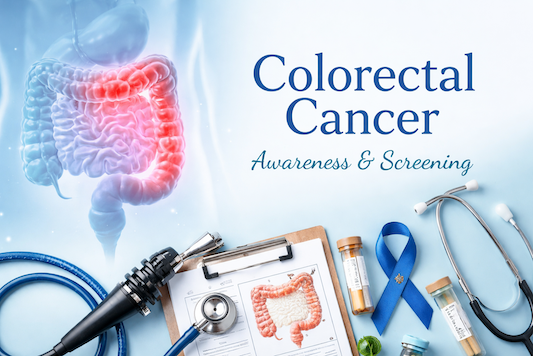
Colorectal cancer is one of the most common cancers worldwide, yet many people know very little about it. The good news? It is also one of the most preventable and treatable cancers—especially when detected early.
Let’s talk about it in simple, practical terms.
What Is Colorectal Cancer?
Colorectal cancer is a cancer that starts in the colon (large intestine) or the rectum. These organs are part of your digestive system and help process waste before it leaves the body.
Most colorectal cancers begin as small growths called polyps. These polyps are usually harmless at first, but over time, some can turn into cancer. This transformation can take years, which is why screening is so powerful—it allows doctors to find and remove polyps before they become dangerous.
Why Should You Care About It?
Because colorectal cancer often develops silently.
In its early stages, many people feel completely normal. No pain. No obvious symptoms. By the time symptoms appear, the disease may already be advanced.
That’s why colorectal cancer is sometimes called a “quiet” cancer—but it doesn’t have to be a deadly one if caught early.
Another reason this cancer deserves attention is that it is increasingly being diagnosed in younger adults. While it was once considered a disease mainly affecting older people, doctors are now seeing more cases in individuals under 50. The exact reasons are still being studied, but lifestyle factors, diet, obesity, and changes in gut health may play a role.
This shift is a reminder that colorectal cancer is no longer just an “older person’s disease,” and symptoms at any age should never be ignored.
Who Is at Risk?
Anyone can develop colorectal cancer, but some factors increase the risk:
Age over 45–50 years
A family history of colorectal cancer or polyps
Diet high in processed or red meat
Low fiber intake
Obesity and lack of physical activity
Smoking
Heavy alcohol use
Diabetes or metabolic syndrome
Long-standing inflammatory bowel disease
Even people with no risk factors can develop colorectal cancer. That is why routine screening is recommended for average-risk adults.
Warning Signs You Should Never Ignore
While early disease may not cause symptoms, later stages can produce:
Blood in the stool (bright red or very dark stools)
Persistent change in bowel habits (diarrhea or constipation)
Feeling that the bowel doesn’t empty completely
Unexplained weight loss
Fatigue or weakness
Abdominal discomfort, cramps, or bloating
These symptoms do not always mean cancer—but they should always be checked by a doctor.
The Power of Screening: Finding Cancer Before It Starts
Screening is the single most effective way to reduce deaths from colorectal cancer.
Why? Because screening can:
Detect cancer early, when it is highly treatable.
Find and remove precancerous polyps before they turn into cancer.
Common Screening Tests
Your doctor may recommend one of the following:
Colonoscopy – Examines the entire colon and removes polyps during the same procedure.
Stool-based tests – Look for hidden blood or abnormal DNA in stool samples.
Flexible sigmoidoscopy or imaging tests – Used in certain situations.
Most people should begin screening around age 45, earlier if there is a family history.
Is Colonoscopy Painful or Dangerous?
This is one of the biggest fears people have—and often the reason they delay screening.
In reality:
The procedure is done under sedation.
Most people feel nothing and remember very little.
It is very safe when performed by trained professionals.
It can prevent cancer, not just detect it.
Many patients say afterward, “I was worried for nothing.”
How Lifestyle Affects Your Risk
Your daily habits play a major role in colorectal cancer prevention.
1. Eat More of This:
Fruits and vegetables
Whole grains
Fiber-rich foods (oats, legumes, brown rice)
Foods rich in antioxidants
2. Cut Back on This:
Processed meats (sausages, bacon, deli meats)
Excess red meat
Sugary and ultra-processed foods
3. Move Your Body
Regular physical activity helps regulate digestion, control weight, and reduce inflammation—all protective factors.
4. Maintain a Healthy Weight
Obesity is strongly linked to colorectal cancer risk.
5. Avoid Smoking and Alcohol
Both smoking and alcohol significantly increase the likelihood of developing many cancers, including colorectal cancer.
Why Early Detection Makes Such a Big Difference
When found early, colorectal cancer is often highly treatable and sometimes completely curable.
When found late, treatment becomes more complex and survival drops significantly.
This is why screening is not just another test—it is a life-saving intervention.
What You Can Do Today
You don’t have to wait for symptoms to take action.
Ask yourself:
Am I due for screening?
Do I know my family history?
Am I eating enough fiber?
Am I physically active?
Small changes today can prevent serious disease tomorrow.
Catching Colorectal Cancer Early and Treating It Right
If you or someone you love is facing colorectal cancer, here's the good news: treatment has come a long way, and there are more options than ever before.
For many patients, surgery is the first step—and these days, it's often done laparoscopically or with robotic assistance, meaning smaller incisions, less pain, and quicker recovery. For rectal cancer specifically, doctors often recommend chemotherapy and radiation before surgery. This "total neoadjuvant therapy" approach has been a game-changer, sometimes shrinking tumors so completely that surgery isn't even needed anymore.
After surgery, some patients receive chemotherapy to mop up any stray cancer cells and reduce the risk of recurrence. This is standard for stage III colon cancer and sometimes recommended for high-risk stage II disease.
When colorectal cancer has spread beyond the colon—what doctors call metastatic disease—treatment focuses on controlling it long-term. This might include chemotherapy, targeted therapies, immunotherapy, or even surgery to remove spots in the liver or lungs if possible.
Here's what's really exciting: we can now test the tumor's genetics to guide treatment. For about 15% of patients whose tumors have a specific genetic feature called MSI-H, immunotherapy drugs can be remarkably effective—often shrinking tumors dramatically even in advanced disease. Doctors also test for mutations in genes like RAS and BRAF to determine which targeted therapies will work best.
Even the way we monitor treatment is getting smarter. A simple blood test looking for circulating tumor DNA (ctDNA) can detect tiny amounts of cancer remaining after surgery, helping doctors decide who needs chemo and who can safely skip it.
Bottom line: colorectal cancer treatment isn't one-size-fits-all anymore. It's increasingly personalized, less invasive, and more effective—with the goal of not just living longer, but living well.
Final Thoughts
Colorectal cancer is common—but it is also one of the few cancers we can actively prevent.
Screening finds problems early.
Healthy lifestyle choices lower risk.
Awareness saves lives.
If you are over 45, or have family history or other risk factors, talk to your doctor about getting screened. It could be one of the most important health decisions you ever make.
Related Articles:
1. What is Cancer?
2. Colon Cancer: What You Need to Know About This Silent Disease
3. Ultra-Processed Foods: Heart Disease and Stroke Risks
Sorces:
· World Health Organization — https://www.who.int/news-room/fact-sheets/detail/cancer
· International Agency for Research on Cancer — https://www.iarc.who.int/cancer-type/colorectal-cancer/
· American Cancer Society — https://www.cancer.org/cancer/colon-rectal-cancer.html
· Centers for Disease Control and Prevention — https://www.cdc.gov/colorectal-cancer/index.html
· National Cancer Institute — https://www.cancer.gov/types/colorectal
· NHS — https://www.nhs.uk/conditions/bowel-cancer/
· Cleveland Clinic — https://my.clevelandclinic.org/health/diseases/14501-colorectal-colon-cancer
· American Society of Clinical Oncology — https://www.cancer.net/cancer-types/colorectal-cancer
Pulse Your Health
Empowering you to achieve your health goals.
Contact
© 2026. All rights reserved.
Disclaimer: The content on this website is for informational purposes only and is not medical advice. Always seek the advice of your physician or other suitably qualified healthcare professional for diagnosis, treatment and your health related needs.