Stay updated on what is trending in health. Discover tips and resources for a healthier, balanced life.

Cervical Cancer: Prevention, Screening, and Early Detection
Learn about cervical cancer, its link to HPV, warning signs, and how screening and vaccination help prevent disease through early detection and timely care.
DISEASES AND CONDITIONS
Dr. S. Ali
2/22/20265 min read

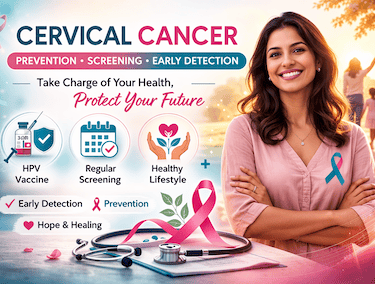
Cervical cancer is one of the few cancers that is largely preventable—yet it still affects hundreds of thousands of women worldwide each year. The good news? With regular screening, vaccination, and awareness of early warning signs, most cases can be detected early or avoided altogether.
Health authorities, including the World Health Organization, emphasize that cervical cancer is a disease we now have the tools to control—and even eliminate as a major public health problem.
What Is Cervical Cancer?
Cervical cancer develops in the cervix, the lower part of the uterus that connects to the vagina. It usually grows slowly over time, starting with abnormal cell changes that can be detected long before cancer forms.
These early changes often cause no symptoms at all, which is why screening is so important.
What Causes Cervical Cancer?
The main cause is a persistent infection with certain types of human papillomavirus (HPV), a very common virus spread through intimate skin-to-skin contact.
Most HPV infections clear naturally. However, when the infection lingers for years, it can lead to abnormal cervical cells and eventually cancer if not detected and treated early.
Why Screening Matters So Much
Cervical cancer used to be one of the leading causes of cancer death in women. Today, routine screening has dramatically reduced that risk in many countries.
According to the Centers for Disease Control and Prevention, regular screening can find precancerous changes before they turn into cancer—making treatment simpler and far more effective.
Common Screening Tests
Pap Test (Pap Smear)
Checks for abnormal cervical cells that may develop into cancer.HPV Test
Looks for high-risk types of the virus that can cause cervical cancer.
Your doctor may recommend one or both tests depending on your age and health history.
Who Should Get Screened?
General recommendations suggest:
Screening begins around age 21
Continues regularly through midlife
May continue beyond age 65 depending on risk factors and past results
Even women who feel completely healthy still need screening—because early cervical changes rarely cause symptoms.
Symptoms to Watch For
In early stages, cervical cancer may not cause noticeable problems. When symptoms do occur, they can include:
Unusual vaginal bleeding (between periods or after menopause)
Bleeding after intercourse
Persistent pelvic pain
Unusual vaginal discharge
Pain during intercourse
These symptoms can be caused by many conditions, not just cancer—but they should always be checked by a doctor.
The Role of Vaccination in Prevention
One of the most powerful tools we now have is the HPV vaccine. It protects against the virus types most likely to cause cervical cancer.
Vaccination is recommended for adolescents and young adults, but some older individuals may also benefit. It does not replace screening, but it greatly reduces risk.
Think of it as prevention working together:
Vaccination + Screening = Strong Protection
Risk Factors That Increase the Chances
While anyone with a cervix can develop cervical cancer, risk is higher if you:
Skip regular screening — this does not increase your chance of getting HPV, but it raises the risk of cervical cancer being detected late, when treatment is more difficult. Screening is powerful because it prevents cancer, not just finds it. Most cervical cancers occur in people who were never screened or screened infrequently.
Have long-term HPV infection — Persistent infection with high-risk HPV types can lead to gradual cell changes in the cervix. Most HPV infections clear naturally, but those that remain for years are the ones that may progress to precancer.
Smoke (which weakens local immune defenses) — Smoking does not cause HPV, but it makes it harder for the body to clear the virus. Tobacco by-products also damage cervical cells, making abnormal changes more likely to persist.
Have a weakened immune system — When the immune system is less effective (for example, due to certain illnesses or medications), the body may struggle to control HPV infections, allowing them to last longer and increase the chance of cellular changes.
Have multiple sexual partners (increasing HPV exposure risk) — This increases the likelihood of encountering HPV at some point in life. The risk relates to exposure to the virus, not the number of partners itself.
Began sexual activity at an early age — Earlier sexual activity means a longer lifetime window for possible HPV exposure and persistence, especially when the cervical cells are more vulnerable to infection during adolescence.
Understanding risk helps people make informed health decisions—not feel alarmed.
What Are Precancerous Changes?
Precancerous changes are abnormal cells found on the cervix that are not cancer—but could become cancer over time if left untreated.
These changes usually develop because of long-term infection with high-risk types of human papillomavirus (HPV), the main cause of cervical cancer.
Doctors often call these abnormalities cervical intraepithelial neoplasia (CIN), which simply means early cell changes limited to the surface layer of the cervix.
The important thing to understand is that:
Precancer is treatable and often reversible when detected early.
They often take many years (10–15 years or more) to develop into cancer, if they progress at all.
Screening is designed specifically to find these changes before they progress to cancer.
Because cervical cancer usually develops slowly, identifying and treating these early abnormalities can prevent most cases from ever occurring. Regular screening has been shown to prevent more than 8 out of 10 cervical cancers.
Can Cervical Cancer Be Treated?
Yes. When found early, cervical cancer is highly treatable and often curable.
Treatment depends on the stage and may include:
Minor procedures to remove abnormal cells
Surgery
Radiotherapy
Chemotherapy in more advanced cases
Early detection usually means simpler treatment and better outcomes.
Why Awareness Still Matters Today
Despite being preventable, cervical cancer remains a global concern—especially in places where screening access is limited or awareness is low.
The encouraging reality is that this is one cancer where routine healthcare truly saves lives.
How You Can Protect Yourself
Here are practical steps every woman can take:
Attend regular cervical screening appointments
Consider HPV vaccination if eligible
Do not ignore unusual bleeding or pelvic symptoms
Avoid smoking
Maintain regular health checkups
Encourage friends and family to get screened too
Prevention is not complicated—but it does require consistency.
Frequently Asked Questions (FAQs)
1. Is cervical cancer preventable?
Yes, in many cases it is. Regular screening can detect precancerous changes early, and HPV vaccination significantly reduces the risk of developing cervical cancer.
2. If I feel healthy, do I still need screening?
Absolutely. Cervical cancer often develops without symptoms in the early stages. Screening is meant to find changes before you feel anything wrong.
3. How often should I have a Pap smear or HPV test?
This depends on your age and medical history. Many women are screened every 3–5 years, but you should follow the schedule recommended by your doctor.
4. Does the HPV vaccine eliminate the need for screening?
No. Even if you are vaccinated, screening is still necessary because the vaccine does not protect against all cancer-causing HPV types.
5. At what age can cervical cancer occur?
It can occur in adult women of many ages, but it is most commonly diagnosed in midlife. However, the risk begins earlier, which is why screening starts in young adulthood.
6. Are abnormal screening results the same as cancer?
Not at all. Most abnormal results mean there are early cell changes—not cancer. These can usually be treated easily to prevent cancer from developing.
7. What are the earliest warning signs to watch for?
Unusual bleeding (especially after intercourse or after menopause), persistent pelvic pain, or unusual discharge should always be checked by a healthcare provider.
8. Can cervical cancer be cured?
When detected early, treatment is highly effective, and many women recover completely. This is why early detection is so important.
The Bottom Line
Cervical cancer does not usually appear suddenly. It develops slowly, giving us a valuable window to detect and treat it early—or stop it before it starts.
With today’s screening tools, vaccination, and awareness, protecting yourself is not just possible—it’s powerful.
Related Articles:
1. What is Cancer?
2. Vaccines: What They Are and Why They Matter to You
Sources:
World Health Organization (WHO) — Screening for Cervical Cancer
https://www.who.int/activities/screening-for-cervical-cancer/screening-for-cervical-cancerCenters for Disease Control and Prevention (CDC) — Cervical Cancer Awareness
https://www.cdc.gov/cancer/features/cervical-cancer.htmlAmerican Cancer Society — Cervical Cancer Screening Guidelines
https://www.cancer.org/cancer/types/cervical-cancer/detection-diagnosis-staging/cervical-cancer-screening-guidelines.htmlNational Cancer Institute (NCI) — Cervical Cancer Prevention (PDQ®)
https://www.cancer.gov/types/cervical/hp/cervical-prevention-pdqMedscape — Cervical Intraepithelial Neoplasia Overview
https://emedicine.medscape.com/article/1618870-overview
Pulse Your Health
Empowering you to achieve your health goals.
Contact
© 2026. All rights reserved.
Disclaimer: The content on this website is for informational purposes only and is not medical advice. Always seek the advice of your physician or other suitably qualified healthcare professional for diagnosis, treatment and your health related needs.